Not sure which fruit trees will thrive where you live? Climate plays a much bigger role than most people expect. Read more
The Best Way to Store Apples Over Winter: Quick and Easy Tips

You have spent the growing season nurturing your apple trees and have enjoyed the harvest. But winter is quickly approaching, and you still have lots of apples that you don’t know what to do with. It would be lovely to enjoy the home-grown fruit throughout the winter months - but you are afraid that within weeks they will shrivel up or turn to mush. What is the best way to store apples over the winter?
To find out, I spoke to David Gilbertson of Gilby’s Nursery and Orchard. He has over 1000 apple trees on his farm in Atkin, Minnesota. And his priority is to ensure that his customers know how to store their apples so they can enjoy a fresh harvest even in the coldest months. David says there are two main steps to effective apple storage.
- You need to harvest your apples at the right time
- You need to store the apples at the right temperature.
Let’s start with David’s advice on harvesting apples for winter storage.

the best time to harvest apples for winter storage
Most people start thinking about apple storage only after they have plucked their apples off their tree. But when it comes to the best way to store your apples over the winter, your pre-harvest strategy is key! For maximum apple storage life, make sure that you harvest the apples when they are mature, but not fully ripe. That is because apples will continue to ripen while in storage, so ripe or overripe apples will quickly become soft and mealy.
This change happens because your apples breathe through microscopic pathways even after they are harvested. They take in oxygen and supply it to their cells. They also release a gas called ethylene, which causes the apple to ripen and eventually rot. Your post-harvest goal is to slow this respiration process to increase storage life.
According to David Gilbertson, there are several tests you can do to decide if your apples are ready for harvest and storage. Some of these tests are great for beginners and some are more advanced!
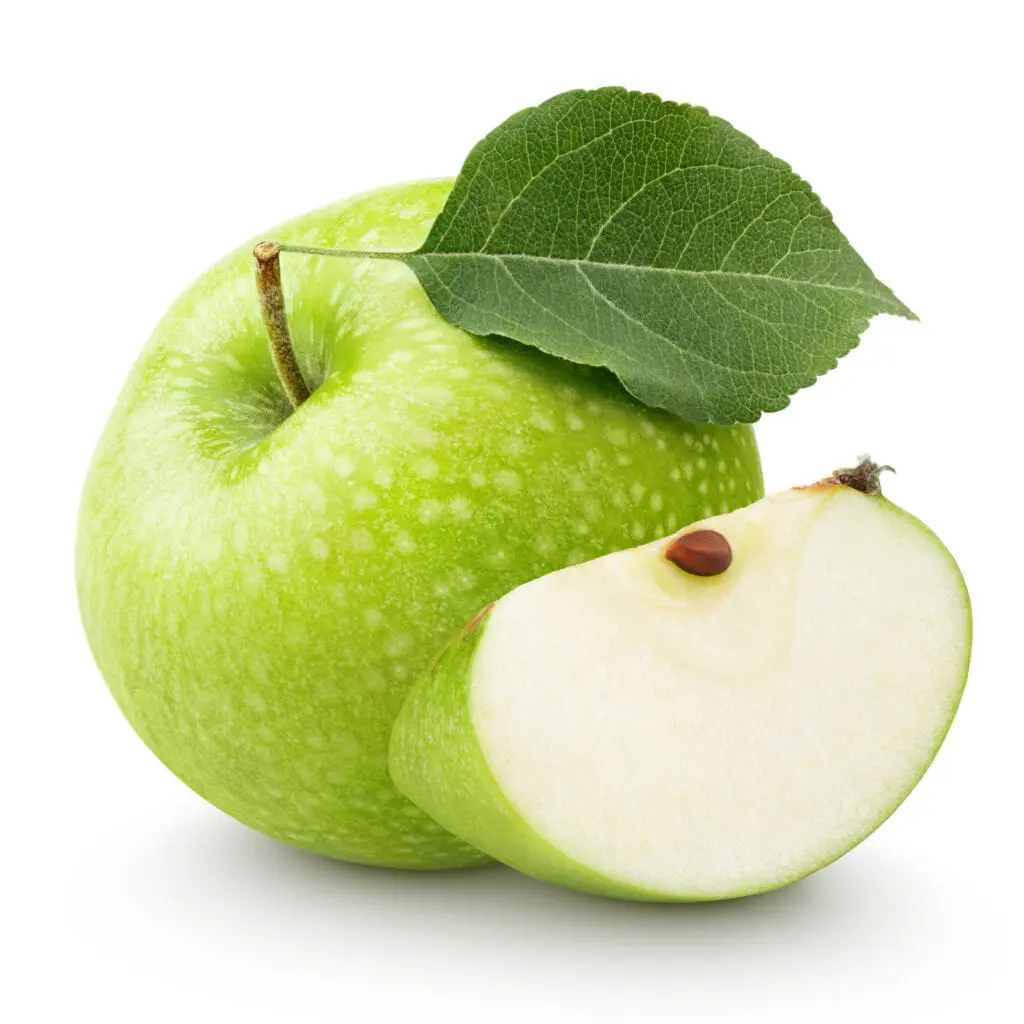
When apples are ripe, their seeds will be dark in colour.
testing apple ripeness for beginners
- Taste the apple 2-3 weeks prior to when you think they are ready. This allows you to determine if the sugars are viable.
- Look at the colour of the apple’s skin. Starting from the bottom of the apple (the calyx) you will start to see the skin colour change from green to a soft yellow.
- Cut into the apple and look at the colour of the seeds. You may notice that the seeds are dark at one end and very light (almost clear) on the other end. You want the seeds to be dark, so you should give the apples another one to two weeks.
testing apple ripeness for advanced growers
- Use a refractometer to test the sugars. This can only be used for certain apple varieties. The sugar content you want also depends on the apple variety, which can be as high as 16 Brix for some apples, like Sweet Tango.
- Try a starch iodine test. You stain the apple with a 4% potassium iodide and 1% iodine solution. The lighter the stain on the apple, the riper the apple is (i.e. the higher the sugar content).
- Use a Penetrometer to test the hardness. You place the plunger of the penetrometer against the apple and it will measure the rupture pressure on a gauge. Different varieties will have different rupture points
Once you have harvested your apples at the optimal time, your next challenge is to store them properly over the winter!
Grow
Fruit Trees
That Thrive
Fruit Trees
That Thrive
Sign up for our newsletter and get this free eBook
Sign up for our newsletter and get this free eBook
the best way to store apples in your fridge
Once you’ve harvested your apples correctly, you need to store them. Commercial growers use controlled atmosphere storage rooms to do this. But, according to David Gilbertson of Gilby’s Nursery and Orchard, you can use your own fridge! Here are David’s top tips for keeping your apples cool and crunchy.
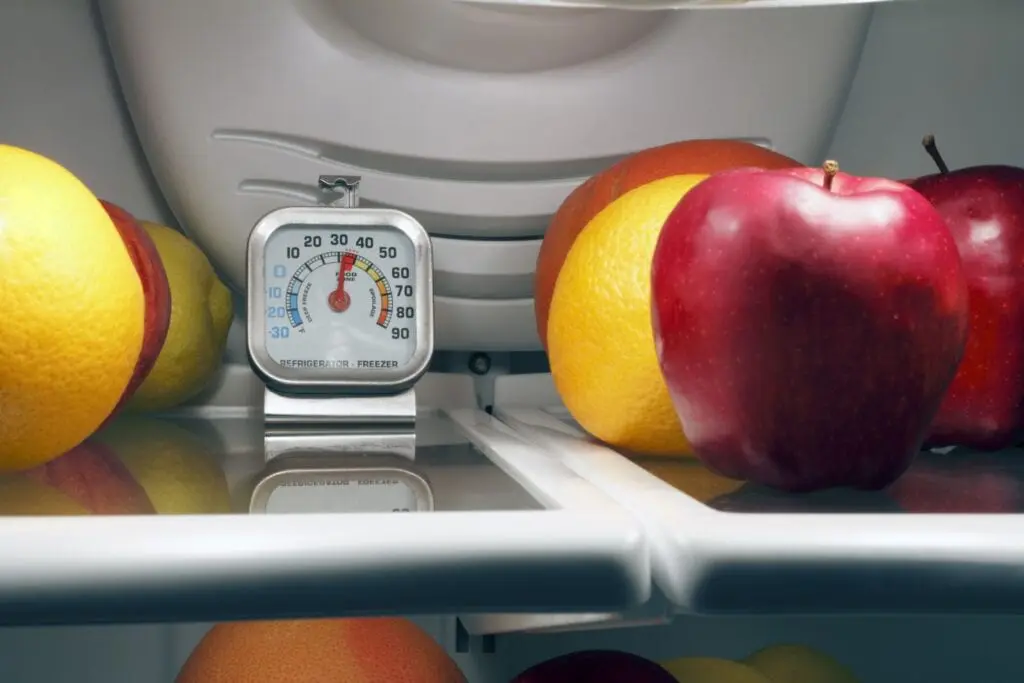
Maintain an optimum temperature between 0˚C (32˚F) and 4.4˚C (40˚F)
Despite seeing apples sitting on shelves at the grocery store, it is best to store apples in cold temperatures. But here precision is key so you will need to use a fridge thermometer that can give you an accurate reading. To ensure accuracy, place the thermometer on the shelf or drawer where you will be storing your apples. Do not place it on the shelves on the fridge door as the temperature will be different there.
The optimum temperature depends on the apple variety, but the sweet spot tends to be 3.3˚C (38˚F) to 4.4˚C (40˚F). You never want to get the temperature down to 0˚C (32˚F) as that is close to freezing and you do not want the apples to freeze.
If you decide instead to leave your apples on your counter or kitchen table, they will ripen and rot very quickly.
“The higher the holding temperature, the greater the softening and respiration rate and the sooner the quality becomes unacceptable,” David Gilbertson explains.
For example, storing apples at be 15.6˚C (60˚F) will cause the apples to degrade 6 times faster, which compromises the quality of the apple.
Maintain an optimum humidity of 90-95%
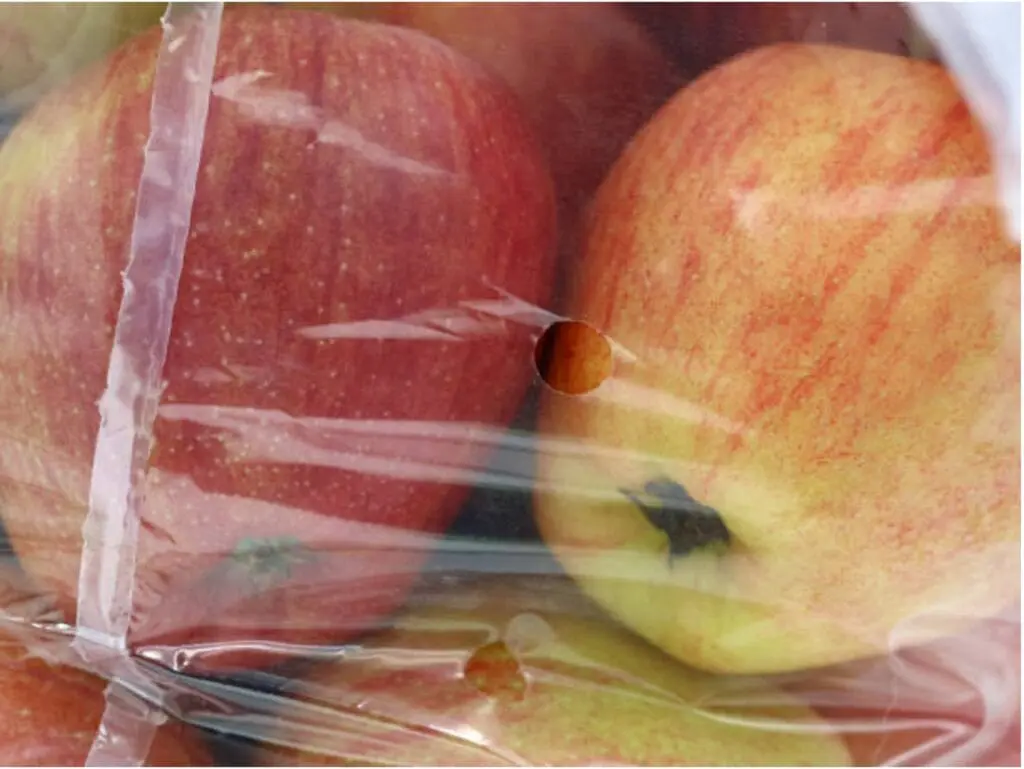
Apples are 84% water so the best way to store apples over the winter and to keep them fresh and juicy is to maintain the humidity at 90-95%. Professional growers have controlled atmosphere rooms where they can set the humidity. But with an ordinary fridge, you can maintain humidity by using a sealable plastic bag that has some holes punched into it that are about 0.64 cm (0.25 inches) in size.
The holes in the bag allow the ethylene gas to be released, while still maintaining a humidity of 90-95%. You can also use the crisper in your fridge, but you can lose a lot of humidity as you keep opening and closing it. This will cause the apples to shrivel up and compromise as they start to become dehydrated. To effectively use your crisper, it is best to keep the apples in the drawstring plastic bag with small holes, as mentioned above.
Ensure there is adequate air circulation
As apples respire, they give off an ethylene gas. The higher the ethylene level, the faster the apple wants to respire and that means it will ripen – and eventually rot – more quickly. So, it is important that the apples have room to breathe when in storage. And, as David explained above, If you are storing your apples in bags, it is important that those storage bags have holes in them to allow the apples to breathe. This will also help the ethylene gas escape.
And one more point! You may notice that the apples have produced a wax-like substance. Don’t worry, this is a natural self-protection system. To make sure your apples stay crisp and tasty, David Gilbertson recommends not scrubbing that wax-like substance off.
how long will apples keep in your fridge?
This chart, provided by David Gilbertson, outlines the storage life of popular apple varieties in Minnesota. It shows how different temperatures can affect the storage life. Honeycrisp apples, for example, will stay fresh for 7 months (28 weeks) if they are stored at about 0˚C (32˚F). But if they are stored at around 4.5˚C (40˚F), they will only last for 3.5 months (14 weeks).

apple storage for professional growers
David Gilbertson’s suggestions are wonderful for home growers. These tips are also helpful for consumers who want to buy their apples inexpensively during the harvest season and enjoy them year-round. But commercial growers have their own challenges in keeping apples fresh for consumers. In the video below, Peter Bosman of Lincoln Line Orchards in Smithville, Ontario describes the steps orchardists have to take to keep their apples fresh during the winter months.
fruit quality and cold storage

Apple storage is easier for some varieties and harder for others. For professional growers, Honeycrisp apples can be notoriously hard to store. While other unusual and heirloom varieties, including Winesap, Snow and Winter Banana Apples are considered “keepers” that can be kept relatively easily throughout the winter months. While these apple varieties aren’t easy to find in supermarkets, they are great options for home growers. To learn how to grow fruit trees organically, consider checking out my books.
Whether you want to store your own home-grown apples, or whether you want to save money and buy apples from local farms during harvest time, it’s important to know the best way to store your apples over the winter! I hope this article helped you! And if you have so many apples that you can’t physically fit them all in a fridge, you can also freeze them, press them into sweet cider or ferment them into hard cider, or even dehydrate them.
Learn more about how to preserve apples in episode 95 of The Urban Forestry Radio Show and Podcast where Susan Poizner talks to homesteader Melissa K Norris about fool proof apple preservation.
Enjoy the harvest!
latest articles
- Why do some fruit trees thrive while others struggle?
- Vertical Mulching for Fruit Trees: When Surface Mulch Isn't Enough
- Red-Fleshed Apples: What They Taste Like, How to Grow Them, and Why They’re So Interesting
- Fertilizing Fruit Trees: Why Water Matters More Than You Think
- How to Read a Soil Test for Fruit Trees: What Your Results Really Tell You

The author of this article is Amy Smith, an intern at OrchardPeople.com. Amy is a student at the University of Guelph studying International Development. She enjoys learning about different cultures and is passionate about social equality.
YOU MAY ALSO BE INTERESTED IN
Best Fruit Trees to Grow: Choosing the Right Trees for Your Climate (Warm, Cold & Tropical)
Let The Sunshine In: Indoor Lemon Tree Care
If you live in a cold climate, growing a lemon tree indoors is still possible. Learn how in this article.

A Superfood in your Garden: How to Grow Seabuckthorn Plants
Learn how to grow nutrient-rich Seabuckthorn berries with plant breeder Bill Schroeder of Agriculture and Agri-Food Canada.

Bush Cherry vs Dwarf Cherry Tree: Best Picks for Your Small Garden
Dwarf cherry tree, or cherry shrub: which is a better choice for your small garden?