From their vivid color to their complex flavors and growing conditions, red fleshed apples invite us to look more closely Read more
Best Fruit Trees to Grow: Choosing the Right Trees for Your Climate (Warm, Cold & Tropical)
Navigating the World of Fruit Trees
People ask me this question all the time:
“What’s the best fruit tree to grow?”
It sounds simple, but the truth is that there is no single "best fruit tree". A tree that thrives in one backyard might struggle or fail just a few hundred miles away. Climate matters. A lot.
That’s exactly why I wrote my new book, Fruit Tree Garden Design. It helps you figure out which fruit trees actually make sense for your specific site, based on climate, space, and growing conditions, before you ever step into a nursery.
No one understand that better than James Kaechele, a program arborist with the Fruit Tree Planting Foundation (FTPF) who helps select fruit trees for community orchards across a wide range of climates.
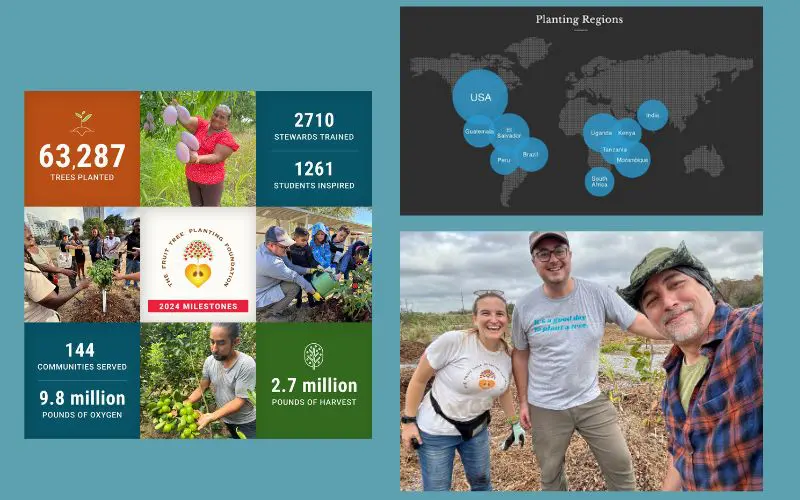
The Fruit Tree Planting Foundation is an inspiring nonprofit that creates community orchards across the United States and around the world. Their goal is to help communities grow their own fresh, nutritious food while building long-term food security. Since 2002, they’ve planted hundreds of thousands of trees, including more than 63,000 trees in 144 communities in 2024 alone!
So together, we explored what actually makes a fruit tree a good choice and how climate quietly decides what will succeed long before you ever dig a hole.
By the way, this is a quick summary of an Orchard People podcast. We’ve pulled out the highlights to give you a taste of the conversation, but there’s so much more in the full episode. Scroll down to watch or listen and hear the full story in context.
There Is No Single “Best” Fruit Tree
James was very clear about this: the “best” fruit tree depends on your climate, your growing conditions, and what people actually want to eat.
You can grow the most beautiful peach in the world but if it doesn’t suit your winters, or your summers are too humid, that tree won’t reward you with fruit.
So instead of chasing one perfect tree, it’s much more helpful to understand the rules your climate sets, and then work within them.
How to Decide What Fruit Trees are Best for Your Climate
Before we talk about specific fruit trees, there are two simple climate tools every grower should understand.
Plant hardiness zones help you understand if the tree can survive your winters
Plant hardiness zones tell you how cold it gets in winter where you live. Each zone represents an average minimum winter temperature. If a nursery says a tree is “hardy to Zone 5,” that tree should handle typical Zone 5 winters. But a Zone 5 tree may struggle or die in colder places. Matching the zone rating to your climate helps you avoid planting something that can’t handle your winter weather.
Chill hours will tell you if your fruit tree will produce a harvest
Many fruit trees need a certain amount of winter cold to “reset” before spring. Chill hours measure how many hours your area spends in cool temperatures (roughly 32°F to 45°F / 0–7°C). If a tree needs 800 chill hours but your area only gets 400, it may bloom poorly and produce very little fruit. Getting more chill than a tree needs is usually fine.
Once you understand hardiness zones and chill hours, the next step is seeing how they play out in real life. James shared a few examples from his work with the Fruit Tree Planting Foundation that show just how much climate can change tree choices, sometimes over surprisingly short distances.
Why Climate Can Change Within a Single State
(Case study: Mississippi)
In the podcast, I wanted to understand how James chooses fruit trees for the community orchards he helps plant around the world. We started with two orchards in Mississippi. Even though they weren’t far apart, the climate shifted dramatically from north to south, and that changed everything about which trees made sense to plant.
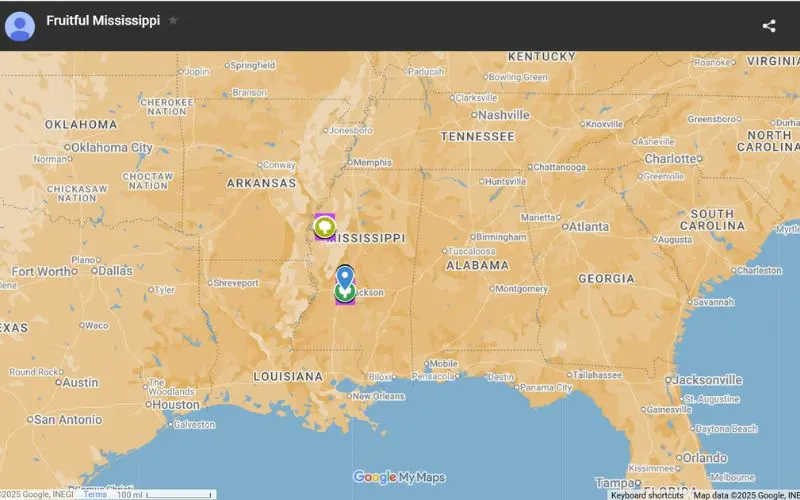
Within just a couple of hours’ drive:
- Southern Mississippi (Jackson) sits near Zone 9 with as few as 200 chill hours
- Northern Mississippi (Cleveland) can be Zone 8 with 1,000–1,200 chill hours
That difference decides whether you can grow citrus, or not.
It’s easy to assume that if two gardeners buy trees from the same nursery, they’ll have similar success. But climate doesn’t work that way. Without checking zones and chill hours, one gardener might end up with a tree that survives but never fruits.
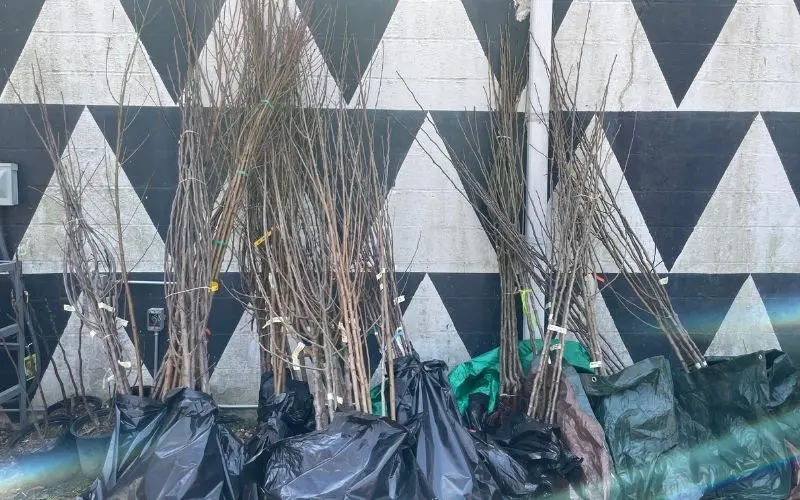
Once James understands the climate limits of a site like this, he narrows his choices to trees that can handle heat, humidity, and low chill hours without constant struggle.
Warm Climate Fruit Tree Favorites
In hot, humid regions with low chill hours, James consistently leans toward trees that are forgiving, productive, and resilient:
- Figs (like Brown Turkey and Celeste): easygoing, long-producing, and widely adaptable
- Pears (such as Moonglow and Ayers): tough, productive, and more disease-resistant than many other fruits
These trees don’t just survive. They thrive under pressure.
How Cold Climates Narrow Your Choices
(Case study: Wisconsin)
Now let’s head north.
In places like Wisconsin, cold winters narrow your options, but they also reward durability. Here, James leaned heavily into cold-hardy, disease-resistant apples, along with native species that are already adapted to harsh conditions.

planted college orchard. The lines will be buried so mowing equipment can pass over them
easily. Photo credit: Fruit Tree Planting Foundation.
In colder regions, James isn’t looking for variety. He’s looking for reliability. Cold winters and disease pressure mean fewer species work well, but the ones that do can be incredibly dependable.
Cold Climate Favorites
- Apples such as Freedom, Frostbite, Haralson, Enterprise, and Liberty
- Native trees like serviceberry and American hazelnut
Cold climates don’t eliminate disease pressure — especially where many similar trees grow close together — so choosing resistant varieties becomes even more important.
The lesson here isn’t “grow apples everywhere.” It’s this:
In cold climates, fewer species work — but the right ones can be incredibly reliable.
Planting Fruit Trees for Tropical Climates
(Case study: Peru)
Our journey took a twist as we landed in Peru.
It's a tropical climate so in much of the country (excluding high elevation areas like the Andes) the climate zones there range from 11–13 and chill hours are extremely low—often close to zero.
That means most classic temperate fruit trees (like apples, pears, and peaches) won’t get the winter cold they need unless they’re special low-chill varieties.
Here, success depends less on temperature and more on shade, water, and seasonal flooding.
Instead of forcing apples or peaches into unsuitable conditions, James works with trees that are part of the local ecosystem and culture.
In places like this, James isn’t asking whether a tree can survive winter. He’s asking whether it can handle water, sun, and soil conditions over the long term.

Tropical Standouts
- Cacao: thrives with partial shade and grows beautifully alongside bananas
- Camu camu: perfectly adapted to areas that flood periodically along rivers
Planning for Climate Extremes
One thing James emphasized again and again: expect extremes.
Weather patterns are less predictable than they used to be. A smart strategy is choosing trees with slightly different needs — especially when it comes to chill hours — so something performs well even in unusual years.
Think of it as spreading your risk, not gambling on one perfect choice.
Grow
Fruit Trees
That Thrive
Fruit Trees
That Thrive
Sign up for our newsletter and get this free eBook
Sign up for our newsletter and get this free eBook
A Few Universal Principles (No Matter Where You Live)
Even though climate drives tree choice, a few ideas came up everywhere we talked:
- Healthy soil matters — mulch helps protect roots and build resilience
- Diversity matters — planting different species spreads risk
- Pollinators matter — flowers nearby invite beneficial insects
- Team Up with Local Experts: State extension programs are full of wisdom and practical tips.
These don’t replace good climate matching — but they support it.
Bringing It All Together
There isn’t one best fruit tree.
But there are fruit trees that make sense for your climate — and once you understand your winters, your chill hours, and your growing conditions, the right choices become much clearer.
When you work with your climate instead of against it, fruit trees stop feeling difficult — and start feeling generous.
How to choose a healthy fruit tree at the nursery
Where to buy fruit trees from reliable sources
Check Out the Full Podcast Here
Best Fruit Trees to Grow with James Kaechele (Eps 123)

Join Orchard People in Supporting Fruit Tree Planting Foundation's Work
If fruit trees pique your interest as much as ours, go back and enjoy previous podcast episodes.
Find out more about the Fruit Tree Planting Foundation if you are inspired by their work. Check out how you can get involved, and consider supporting their work by giving or even applying for a community orchard in your area!
Your involvement helps plant the seeds for a more plentiful and green future.
Stay in Touch: For updates and more tree-talk, hop over to orchardpeople.com/sign-up.

Susan Poizner
Award-winning author, podcaster, fruit tree care educator and creator of the fruit tree care education website OrchardPeople.com. Learn more about Susan on the about us page.
YOU MAY ALSO BE INTERESTED IN
Red-Fleshed Apples: What They Taste Like, How to Grow Them, and Why They’re So Interesting
Let The Sunshine In: Indoor Lemon Tree Care
If you live in a cold climate, growing a lemon tree indoors is still possible. Learn how in this article.

A Superfood in your Garden: How to Grow Seabuckthorn Plants
Learn how to grow nutrient-rich Seabuckthorn berries with plant breeder Bill Schroeder of Agriculture and Agri-Food Canada.

Bush Cherry vs Dwarf Cherry Tree: Best Picks for Your Small Garden
Dwarf cherry tree, or cherry shrub: which is a better choice for your small garden?