From their vivid color to their complex flavors and growing conditions, red fleshed apples invite us to look more closely Read more
Fruit Tree Garden Design: Cultivating Your Backyard Orchard
Have you ever considered starting your own fruit tree garden? Whether you're a novice or a seasoned gardener, a fruit tree garden design that fits your local climate and landscape can be both rewarding and challenging. In this episode, I sat down with Colleen Dieter, a landscape consultant from Texas to explore the essentials of fruit tree garden design.
A little more about Colleen:
- Is an ISA certified arborist
- Runs Red Wheelbarrow Landscape Consulting in Austin, Texas
- Collaborates with her friend, Leah Churner of Delta Dawn Sustainable Gardens, to create podcasts and landscape designs - they bring more than 30 years of practical experience, helping both private and community orchards thrive
- Founded Central Texas Seed Savers to prevent local plants from going extinct
- Is a proud student of Orchard People's fruit tree care courses!
By the way, this is a quick summary of an Orchard People podcast. We’ve pulled out the highlights to give you a taste of the conversation—but there’s so much more in the full episode. Scroll down to watch or listen and hear the full story in context.

Introduction to Fruit Tree Garden Design
Creating a fruit tree garden is about more than just planting trees; it's about crafting a sustainable environment where both trees and surrounding plants help each other out. Colleen shares that the success of a fruit tree garden depends significantly on selecting trees and cultivars suitable for your location. Understanding regional climate factors, such as chill hours, is critical for cultivating trees like apples and pears.
We talk more about choosing fruit trees appropriate for your space and the importance of chill hours, especially if you live in warmer climates, in these articles:
- 10 Best Heirloom Apple Trees for Warm Climates: Top Picks for Southern Growers with nurseryman Larry Stephenson
- How to Choose the Right Fruit Trees: A Beginner's Guide with Master Gardener Josh Davis

How to Design Your Fruit Tree Garden
Here. are two top tips to kick-start your fruit tree garden:
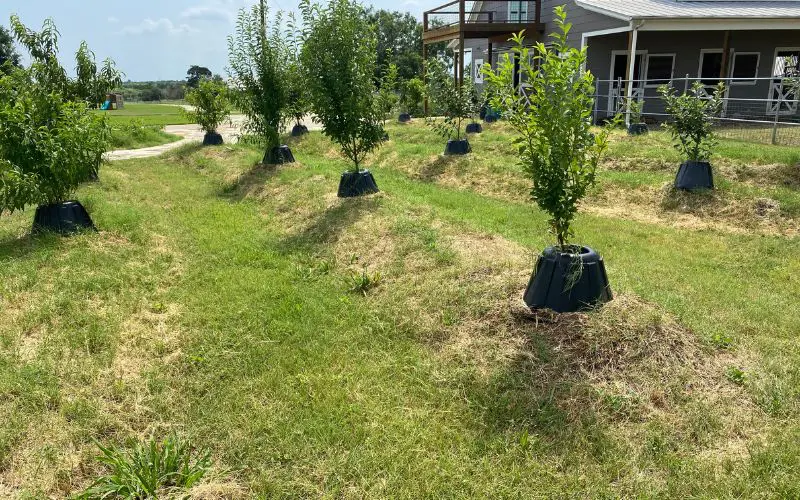
- Soil Check: Some soils retain too much water, which can suffocate tree roots. Instead of planting trees into the ground knowing that the soil retains too much water, being flexible, creative, and building small hills or mounds can improve drainage, allowing trees to grow stronger. You can bring life to your soil by caring for it properly.
- Tree Selection: Different fruit tree varieties have different inherent characteristics. Some tree varieties prefer cooler climates, while others thrive in warmth.
- Chill hours: If your area has mild winters, opt for low chill varieties like Anna apples or Ein Shemer apples for better growth.
- Age: Is it better to buy an established fruit tree? Or should you opt for a younger tree? If you purchase an older tree you may think you will enjoy an earlier harvest. But, there is a downside. The tree may struggle to adapt to the new environment. In contrast, a younger fruit tree will adapt quicker, grow more vigorously and be healthier in the long run.
In the podcast Colleen and Susan chat about a lot of other considerations....
Overcoming Fruit Tree Garden Challenges
- Soil Problem: For overly wet soils, use mounds or adjust soil drainage to prevent wet feet. Making a hugelkultur mound or berms/swales can be other options. For dry soils consider installing irrigation, since trees need to take in nutrients from the soil in liquid form.
- Climate Conditions: Select tree varieties that suit your local weather patterns. For instance, if you live in a cold climate choose cold hardy fruit trees. In warmer climates, consider warm climate apples. Talk to local gardeners, nurseries, and/or university extensions to see what grows well. And learn about the secrets to source fabulous fruit trees for free or frugally.
- Pollination Needs: Some fruit trees need more than one tree in order to produce fruit. So consult with your local fruit tree nursery which trees will cross pollinate with your selections. Plant diverse tree species to ensure effective pollination and fruit production.
Also consider native trees. Native trees are adapted to the local climate and soil conditions, and they are generally resistant to pests and diseases. On the flip side, consider how palatable the fruit is (fresh vs. processed), and how much the local wildlife may be "competing" with you for the fruit!
In the podcast, Colleen explains that some of the easiest fruit to grow are Mexican plum, Texas persimmon, and red mulberry. Figs are also a great choice in Texas. Read Grow Fruit Trees Fast (Amazon affiliate link) to learn how to identify easy to grow fruit trees near you.

Learning from Community Orchards
Community orchards are great examples of shared spaces for growing a wide variety of fruit.
Planting only one type of tree might sound like a good idea at first if you enjoy a particular fruit. In reality, this can not only limit fruit production (if the fruit tree requires pollination partners) but attract pests and diseases! Mixing different varieties can solve this issue and boost pollination.
Grow
Fruit Trees
That Thrive
Fruit Trees
That Thrive
Sign up for our newsletter and get this free eBook
Sign up for our newsletter and get this free eBook
Ready to Dig Deeper? Check Out the Full Podcast Episode!
A fruit tree garden design is a balance of understanding the local climate and the trees' needs, careful planning, and enthusiasm. Find the right trees for your conditions and start building a thriving garden space.
Listen to the full podcast with Colleen for more insights and actionable advice.
Listen Now
Watch Now on YouTube
Fruit Tree Garden Ideas with Colleen Dieter (Eps 119)

Ready to Grow?
For more tips, visit orchardpeople.com. Whether you're planning a single tree or an entire orchard, remember: the journey of growing fruit trees is as rewarding as the harvest itself.

Susan Poizner
Award-winning author, podcaster, fruit tree care educator and creator of the fruit tree care education website OrchardPeople.com. Learn more about Susan on the about us page.
YOU MAY ALSO BE INTERESTED IN
Red-Fleshed Apples: What They Taste Like, How to Grow Them, and Why They’re So Interesting
Let The Sunshine In: Indoor Lemon Tree Care
If you live in a cold climate, growing a lemon tree indoors is still possible. Learn how in this article.

A Superfood in your Garden: How to Grow Seabuckthorn Plants
Learn how to grow nutrient-rich Seabuckthorn berries with plant breeder Bill Schroeder of Agriculture and Agri-Food Canada.

Bush Cherry vs Dwarf Cherry Tree: Best Picks for Your Small Garden
Dwarf cherry tree, or cherry shrub: which is a better choice for your small garden?