From their vivid color to their complex flavors and growing conditions, red fleshed apples invite us to look more closely Read more
Why Grow Perry Pears? Discover the Fruit Behind Traditional Pear Cider
Imagine walking through an English orchard filled with enormous pear trees, some of them hundreds of years old. Their branches stretch high into the sky, and beneath them, volunteers are gathering fallen fruit to make a traditional drink that many people have never tasted.
That's where I found myself in Gloucestershire, England, learning about perry pears and the people working to preserve them.
Perry is a fermented alcoholic drink made from pears, much like hard cider is made from apples. But perry pears are special. They come in remarkable varieties, each with its own flavour, history, and personality.
So why grow perry pears when you could grow ordinary dessert pears? And what makes these unusual trees worth preserving?
I spent two days harvesting pears and learning about perry making with Phil Kester and the volunteers of 99 Pines, a community organization dedicated to keeping this wonderful tradition alive.
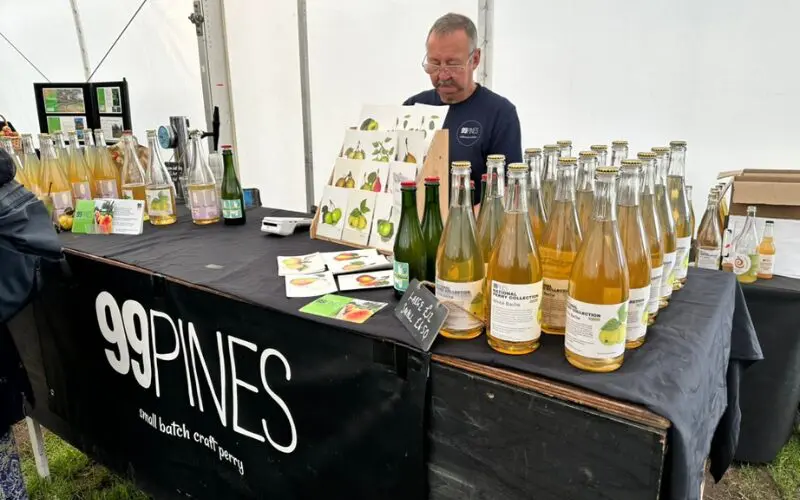
By the way, this is a quick summary of an Orchard People podcast. We’ve pulled out the highlights to give you a taste of the conversation—but there’s so much more in the full episode. Scroll down to watch or listen and hear the full story in context.
Perry pears are grown for their juice rather than for fresh eating
Most of us are familiar with pears that we can pick from a tree and enjoy fresh.
Perry pears have a different purpose. They're traditionally grown to produce perry, a fermented drink that can be delicate and sparkling or rich and full of flavour.
Some perry pears contain significant amounts of tannins. These are natural compounds that create a drying sensation in your mouth, much like you might experience when drinking strong tea or red wine. Different pear varieties contribute their own characteristics to the finished drink.
Phil explains that some perries are light and sparkling, almost like Prosecco, while others are bolder and more tannic.
"It's really subtle, it's really light," he says, describing the appeal of traditional English perry.
For someone interested in growing fruit for fermentation, perry pears offer another possibility beyond apples. And for those who enjoy exploring unusual fruit varieties, they open the door to a remarkable world of flavours.
Growing rare perry pear varieties helps preserve living history
A few hundred years ago, perry making was part of everyday agricultural life in Gloucestershire and the surrounding counties of Herefordshire and Worcestershire.
Phil explains that many farms once had their own perry pear trees, often growing varieties associated with particular villages or local areas. There were more than 100 different varieties in the region, but as traditional farming practices changed and perry became less commercially viable, many of these enormous old trees were removed.
Fortunately, people began working to preserve what remained.
Phil tells me about Charles Martell, who catalogued rare perry pear varieties and helped establish a collection at the Three Counties Showground in Malvern. Then, in 2007, Jim Chapman helped establish another collection at the National Perry Pear Centre in Hartpury, creating an additional home for these unusual trees.
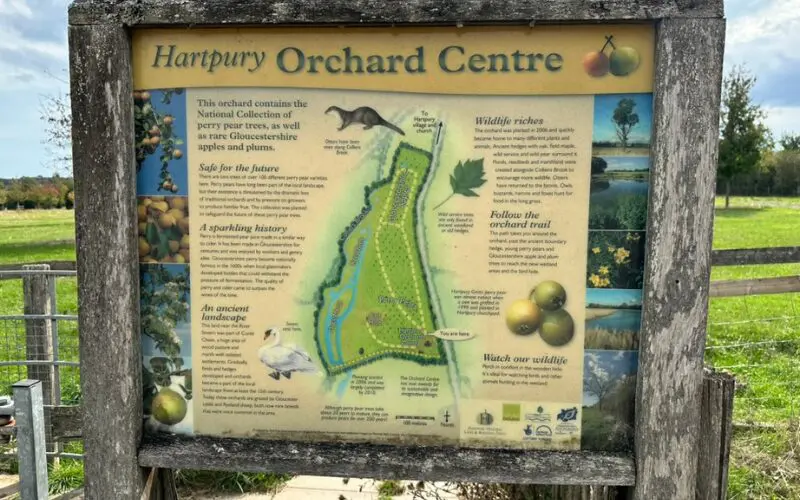
Today, volunteers with 99 Pines harvest fruit from these collections and other historic orchards. Some of the varieties have wonderfully memorable names: Hendre Huffcap, Turner's Barn, Merrylegs, Dead Boy, and Gin pear. The Gin pear even has a flavour reminiscent of juniper!
Preserving these trees means keeping their unique characteristics alive for future generations. But preservation isn't simply about keeping a tree growing. It's also about learning when its fruit ripens, how to harvest it, and what makes it different from other pears.
That knowledge becomes even more valuable when people share it.
Volunteer Mark Jordan hopes the group will eventually graft and propagate more of these rare varieties. Grafting involves joining a piece of a desired variety to a compatible rootstock so it can grow as a new tree. For anyone considering growing a heritage fruit tree, that's an important reason to look beyond the familiar varieties offered in most nurseries.
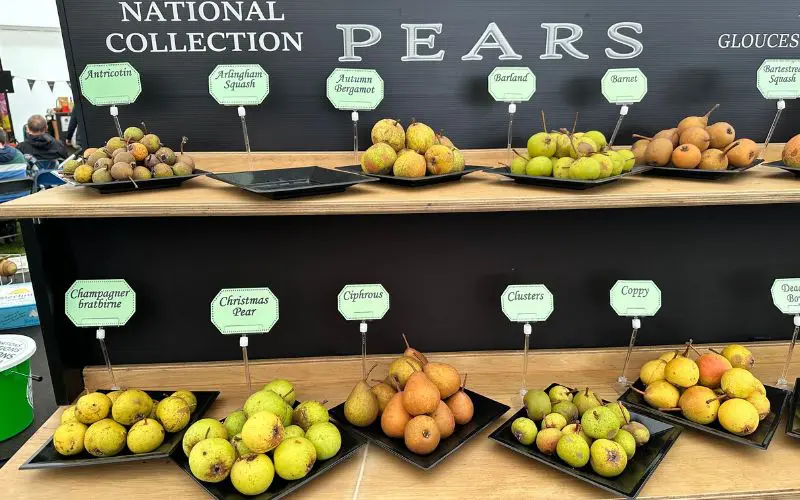
Harvesting perry pears requires careful attention to ripeness
One of the biggest challenges of growing perry pears is knowing exactly when to harvest them.
Phil explains that some varieties have an extraordinarily short window between ripeness and spoilage. A pear might be ready on Wednesday and rotten by Saturday.
That's one reason traditional perry making requires so much attention.
During my visit, the volunteers harvested pears that had already fallen from the trees. They also used a long, extendable pole with a hook on the end, called a panking pole, to encourage ripe pears to fall.
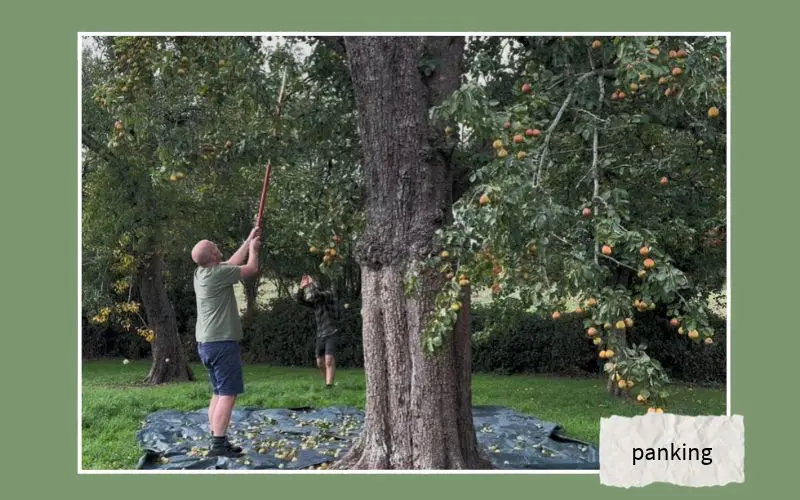
They placed tarpaulins beneath the trees to catch the fruit and make collection easier.
Mark explains that pears dropping naturally can be a sign that they're ripe or nearly ripe. But that doesn't mean every fallen pear is suitable for pressing.
Here are a few practical lessons from the harvest:
- Watch the fruit closely as harvest approaches. Different perry pear varieties ripen at different times, and some deteriorate quickly.
- Collect fallen pears promptly. Fruit left on the ground may become damaged, spoiled, or eaten by animals.
- Handle the trees carefully. Panking can help bring down ripe fruit, but excessive force may break branches.
- Sort the harvest. Discard pears that are rotten, diseased, or damaged by animals.
- Check ripeness before pressing. Some harvested pears may need a couple of additional days before they're ready.
Mark also describes how certain pears soften and change internally as they mature, a process he refers to as bletting. This can make ripeness difficult to judge simply by looking at the outside of the fruit.
"It's not a science. It's an art, and Phil has that," Mark says.
And while that kind of experience takes time to develop, it begins with something every fruit tree grower can practise: observation.
Notice when the first pears begin to fall. Watch how quickly they soften. Compare the fruit from one tree with another. Over time, those small observations help us understand the particular trees we're caring for.
Making perry begins with crushing and pressing the pears
After harvesting, the volunteers collect the pears in buckets, transfer them into crates, and bring them back to the centre. Then comes the interesting part: turning the fruit into juice.
First, the pears are milled or chopped into small pieces. This traditional process is called scratting.
During my visit, Phil explained that the crushed pears had been left overnight before pressing. This resting period is called maceration. It allows the chopped fruit to sit before the juice is extracted.
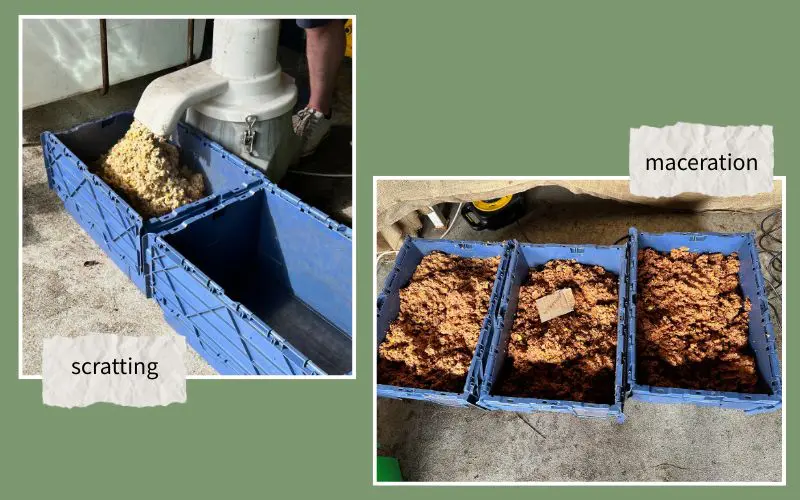
The next day, the volunteers press the pears and transfer the juice into fermentation vessels. During fermentation, yeast converts sugars in the juice into alcohol.
Phil explains that the initial fermentation continues for several months. Early in the new year, the group may siphon the perry into another container, leaving behind the yeast sediment that has collected at the bottom. This process is called racking.
The perry then rests until fermentation is complete.
One interesting detail is that Phil keeps different pear varieties separate during processing. He's still discovering what some of these rare varieties taste like on their own. This allows him to better understand each pear's contribution to the finished drink before considering how different varieties might work together.
Perry making can be more challenging than apple cider making. Phil notes that the fruit can spoil quickly, bacterial contamination is a concern, and blending finished perries isn't always straightforward.
And to Phil, those challenges are also part of what makes traditional perry worth preserving: an English secret. Each variety has its own characteristics, and learning to work with them helps keep knowledge alive that might otherwise disappear.
If you're curious about the apple side of this tradition, explore our guides to making apple cider and making hard cider.
Perry pear orchards bring people together
One of my favourite parts of visiting 99 Pines wasn't just learning about the pears. It was seeing how the harvest brought people together. The volunteers gather for a two-week harvest season. Some are local residents, while others travel from farther away. They spend the morning collecting pears, share lunch, and then work together to crush and press the fruit.
Mark told me something that stayed with me:
"I do like perry, but that's not the main reason I do it. It's working with people."
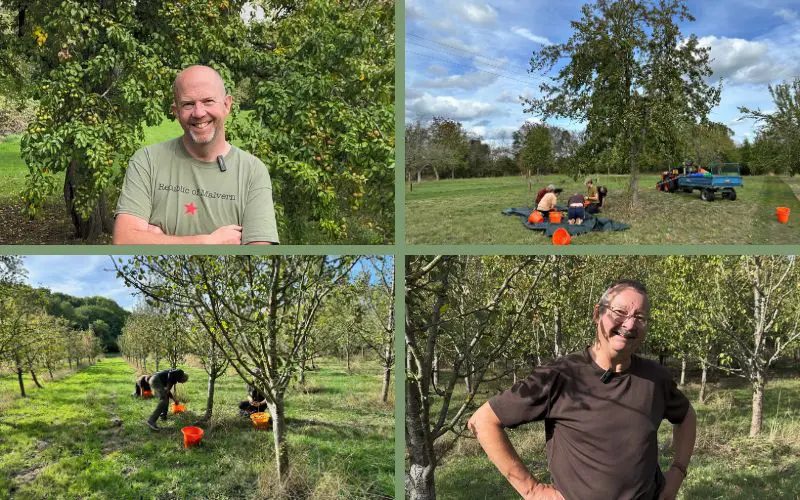
Of course, the volunteers are helping preserve rare pear varieties and a centuries-old tradition. But something else is growing alongside those trees: relationships.
People come together to harvest fruit, share meals, learn new skills, and contribute to their community. The group also uses proceeds from its perry sales to support charitable organizations, including a teenage mental health charity and a hospice.
Traditional orchards have long been places where people gather, celebrate, and connect with the seasons. Another example is wassailing, an old orchard tradition that celebrates fruit trees and hopes for a good harvest.
Grow
Fruit Trees
That Thrive
Fruit Trees
That Thrive
Sign up for our newsletter and get this free eBook

Sign up for our newsletter and get this free eBook
Growing perry pears is about preserving something special.
Perry pears may not be the easiest fruit trees to grow for someone looking for a simple, predictable harvest. Their fruit can ripen quickly, and traditional perry making requires time, attention, and practice.
And yet, there are good reasons to grow them. They offer unique flavours, preserve rare varieties, and connect us with generations of people who cared for these trees before us.
If you're considering growing perry pears, begin by learning which varieties are available in your region and whether they're suited to your growing conditions. You'll also need to consider pollination, space, and how you plan to use the harvest.
Perhaps the question isn't simply whether a fruit tree is easy to grow. It's also what we hope to learn, preserve, and share by growing it.
As I left Gloucestershire, I found myself thinking about how easily traditions like this can disappear when people stop practising them. Fortunately, the volunteers of 99 Pines are keeping this one alive, one perry pear tree at a time.
Listen to the full podcast for more info
Join Susan in Gloucestershire to discover how traditional perry pears are harvested, processed, and preserved..
Continue exploring
For another perspective on heritage pears, listen to Susan's conversation with Barry Masterson in Perry Pears for Cider, where they explore the old pear trees of rural Germany, their forgotten uses, and the traditions worth preserving.

Susan Poizner
Award-winning author, podcaster, fruit tree care educator and creator of the fruit tree care education website OrchardPeople.com. Learn more about Susan on the about us page.
YOU MAY ALSO BE INTERESTED IN
Red-Fleshed Apples: What They Taste Like, How to Grow Them, and Why They’re So Interesting
Let The Sunshine In: Indoor Lemon Tree Care
If you live in a cold climate, growing a lemon tree indoors is still possible. Learn how in this article.

A Superfood in your Garden: How to Grow Seabuckthorn Plants
Learn how to grow nutrient-rich Seabuckthorn berries with plant breeder Bill Schroeder of Agriculture and Agri-Food Canada.

Bush Cherry vs Dwarf Cherry Tree: Best Picks for Your Small Garden
Dwarf cherry tree, or cherry shrub: which is a better choice for your small garden?