Not sure which fruit trees will thrive where you live? Climate plays a much bigger role than most people expect. Read more
The Medlar Fruit Tree: Easy to Grow, Productive and Shaped like a Dog's Bottom?
While I have lots of experience growing conventional fruit trees like apples, pears, apricots, plums, and cherries, I recently learned about the classic old world fruit of the medlar fruit tree.
Interestingly, Medlar fruit trees are super productive and easy to grow. Intrigued by its unique characteristics and storied past, I invited Jane Steward, author of "Medlars - Growing and Cooking", to join me on a recent podcast. Jane has a National Collection of Medlar varieties in North Norfolk, UK, and her passion for these quirky trees is contagious.

Lower left: Jane and her medlar creations: jars of jelly. Photo Credit: Jane Steward.
Right: Jane's book "Medlars - Growing and Cooking" and plate of medlars. Photo Credit: Jane Steward.
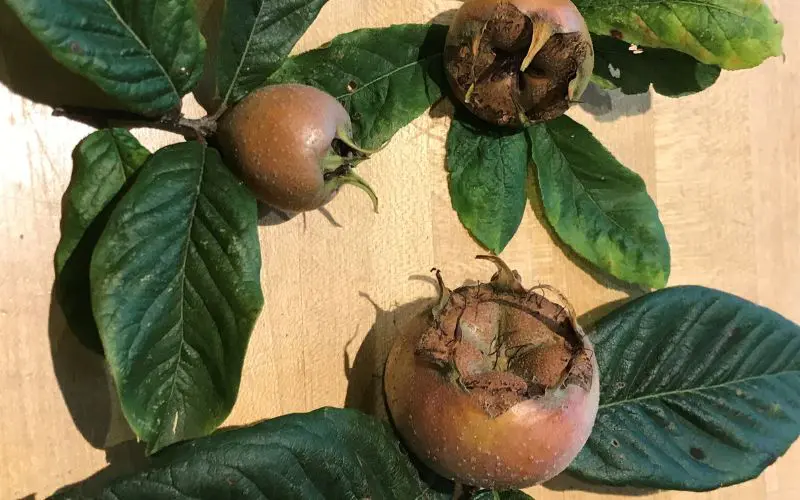
Together, we explored how to choose, grow, and prune medlar fruit trees. We also delved into this unique (and funny-looking!) fruit’s appearance, taste, and preparation. As Jane put it, "In France, this fruit is known as a cul de chien, which sounds a great deal more attractive than 'dog's bottom,' which is how it translates in English!" That description alone might make you curious enough to grow one!
So, let's dig in!
Introduction to the Medlar Fruit
Medlar fruit is hard to find in supermarkets and even in farmers' markets. But this old world fruit is steeped in history. Closely related to apples and pears, medlar fruit can taste a bit like apple sauce, with hints of quince and pear.
"Medlars are versatile. They make very delicious as well as distinctive looking table fruit," Jane explained. Some varieties, like the Iranian Medlar, can be eaten straight from the tree when fully ripe. Others are ideal for creating jellies, chutneys, and even medlar syrup.
They are also beautiful trees, with wonderful spring blossoms and fabulous fall colour. A generous harvest is the icing on the cake.
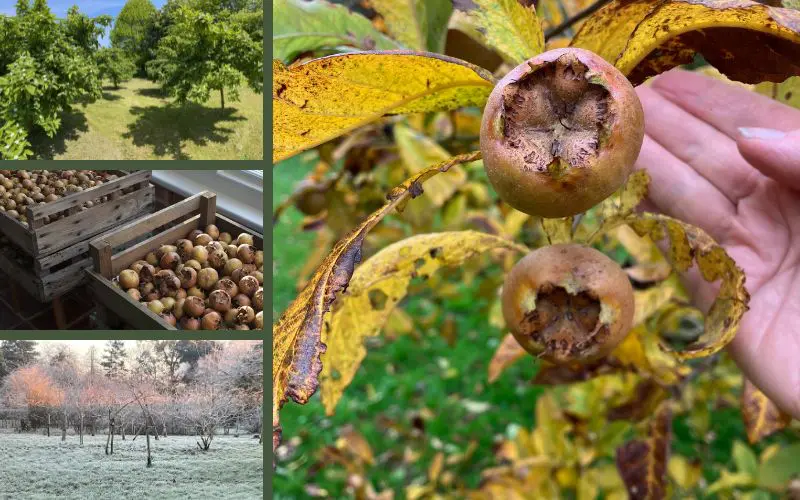
Top left: beautiful medlar trees in summer; middle left, medlar harvest; bottom left, medlars in winter with frost; right, ripe medlars in fall ready for picking. Photo credits: Jane Steward.
Growing Medlar Trees
If you’re looking for a low-maintenance fruit tree, Jane says that medars are a good option.
"They are easy, straightforward, undemanding trees to grow," she said. "They do really well in temperate zones four through eight in the Northern Hemisphere and the equivalent in the Southern Hemisphere."
Medlars are also self-fertile, meaning you only need one tree to produce fruit. That’s a big advantage over apples, which often require a second tree for cross-pollination. Jane enthusiastically noted how Medlars remove the confusion of cross-pollination rules, calling them “heaven sent.”
Grow
Fruit Trees
That Thrive
Fruit Trees
That Thrive
Sign up for our newsletter and get this free eBook
Sign up for our newsletter and get this free eBook
Pruning Medlar Trees: A Detailed Guide
While these trees are low-maintenance, they are not "no-maintenance." Pruning is essential for maintaining a healthy Medlar tree. Here’s a breakdown of some essential pruning practices:
Pruning is essential for maintaining a healthy Medlar tree. Here’s a breakdown of some essential pruning practices:
- Understanding the Growth Pattern: Medlars naturally grow in a bushy manner with unpredictable shapes. As Jane humorously put it, "They’re rather like children. They start with the same genetic ingredients, but hey, one's got curly hair and one's got straight hair and off we go."
- Avoid Heading Cuts: Medlars are tip-bearing trees, meaning they produce fruit on the previous year's growth. Shortening branches with heading cuts will remove fruiting buds and reduce your harvest. Instead, leave the tips intact to encourage fruit production.
- Thin Out Crossing Branches: Focus instead on removing branches that cross or rub against each other, which can lead to damage and disease. Selectively prune entire branches as needed to improve air circulation.
- No Formal Structure Needed: Unlike apple trees, medlars don't require a rigid structure. Their naturally charming shapes are part of their appeal.
- Initial Pruning at Planting: If you're planting a young bare-root whip (a one-year-old tree), head it back (shorten in) to the height where you want your first branches to form. After that, the tree will naturally take the lead. As Jane said, "The tree will know what to do."
"You can just decide where your first branches are and take it from there," she said. "Rub anything off below that and then you're done."
Medlar Varieties and Rootstocks
When selecting a Medlar tree, it’s crucial to choose the right variety and rootstock to match your needs.
- Cultivar Differences: From the popular Nottingham to the dessert-worthy Iranian, cultivars differ in size, flavor, and growth habits. Jane noted the challenges in identifying cultivars, saying, "Facial recognition problems are huge with Medlar, particularly these medium-sized, round, quite closed calyx examples."
- Choosing Rootstock: Choose a suitable rootstock based on available space and desired tree size. For instance, Quince C rootstock supports a more compact growth ideal for smaller gardens.
Exploring More about Medlar Fruit Trees and Jane Steward's Book
For those interested in a deep dive into these fascinating trees, you can listen to the podcast, watch the video, and/or explore Jane's book below.
Medlar Fruit Tree with Jane Steward (Eps 115)

Or you can dig into Jane Steward’s book, "Medlars - Growing and Cooking", which provides a comprehensive look into both the horticultural and culinary aspects of Medlars. Steward’s expertise and passion are evident as she shares recipes alongside practical growing tips.
It Looks Funny - and That's Part of the Charm
Many of us grow fruit trees because we want to enjoy the taste of fruits that you can't buy anywhere else. The Medlar fruit tree is a great option for that. It's more than just an oddity; it's a resilient and versatile tree. Whether you're interested in its historical roots or culinary applications, the Medlar fruit tree is full of surprises. Its quirky appearance may raise a few eyebrows, but once you taste its rich, sweet flavor, you'll understand why this ancient fruit has stood the test of time.
FAQ on Medlar Fruit Trees (Courtesy of Jane Steward)
Q: How close can medlar trees be planted?
My half standards, on hawthorn or quince A rootstock are 10-12’ apart.
Q: Can you grow a medlar tree in a pot?
One of my medlars would be a beautiful feature tree in a small backyard, maybe 30 x 30 feet in area (roughly 9 x 9 metre area).
Q: Are medlar trees self-pollinating?
They are self fertile, and will produce a crop as long as a pollinator lands on the open faced flowers and rummages around.
Q: How tall do medlar trees grow? How big do medlar trees grow?
The half standards I grow are reaching 10-12 feet in height.
Medlar trees can be very long lived, and I know of some in east Anglia which are two hundred years old. These examples are multi stems, and are broader than they are tall. Maybe 25 feet across and 15 or so feet in height.
Q: What type of soil do medlar trees need?
They thrive in neutral to slightly acid soil.
Q: Can medlar trees grow in part shade?
Yes they can.
Q: When do medlar trees start producing fruit?
They will fruit well by their chronological fifth birthday. Before then they will probably flower and maybe set some fruit. Ideally these young fruits should be pinched out.

Susan Poizner
Award-winning author, podcaster, fruit tree care educator and creator of the fruit tree care education website OrchardPeople.com. Learn more about Susan on the about us page.
YOU MAY ALSO BE INTERESTED IN
Best Fruit Trees to Grow: Choosing the Right Trees for Your Climate (Warm, Cold & Tropical)
Let The Sunshine In: Indoor Lemon Tree Care
If you live in a cold climate, growing a lemon tree indoors is still possible. Learn how in this article.

A Superfood in your Garden: How to Grow Seabuckthorn Plants
Learn how to grow nutrient-rich Seabuckthorn berries with plant breeder Bill Schroeder of Agriculture and Agri-Food Canada.

Bush Cherry vs Dwarf Cherry Tree: Best Picks for Your Small Garden
Dwarf cherry tree, or cherry shrub: which is a better choice for your small garden?