Learn how to recognize the signs of soil compaction, understand when vertical mulching may help, and discover the research behind Read more
How to create rabbit barriers for fruit trees in ten minutes or less!

I don't mind if rabbits nibble on the lettuce, peas and sunflowers in my veggie garden. I'm ok with sharing. But when rabbits gnaw on the bark of my fruit trees, it makes me mad. That's because rabbit damage can seriously harm a fruit tree and even kill it.
So, in this article I'll explore how to create effective rabbit barriers for fruit trees. Most online tutorials will encourage you to build fences with posts and wire but that can take time. Instead, I'll focus on creating rabbit barriers that can be assembled in less than 10 minutes.
Does that sound good? If your answer is "yes," let's get started!
Why is it important to install rabbit barriers for fruit trees?
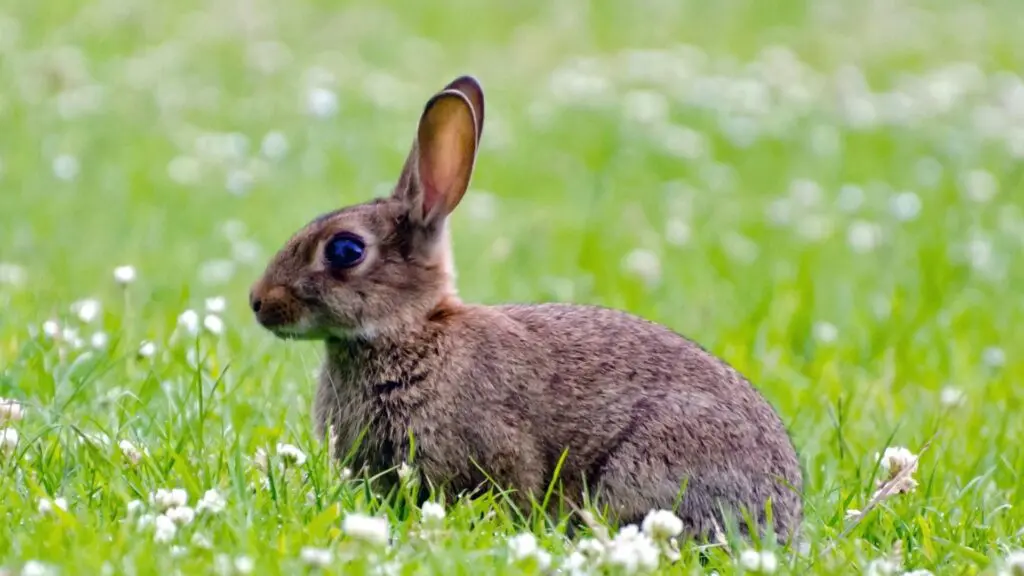
In the summer, greenery is plentiful and rabbits can find lots of food to eat. But during the winter, food becomes scarce as other vegetation dies off. So these little critters eat whatever they can find - including tree bark. Young fruit tree bark is especially appealing to rabbits because it's thin, tender and easy to chew.
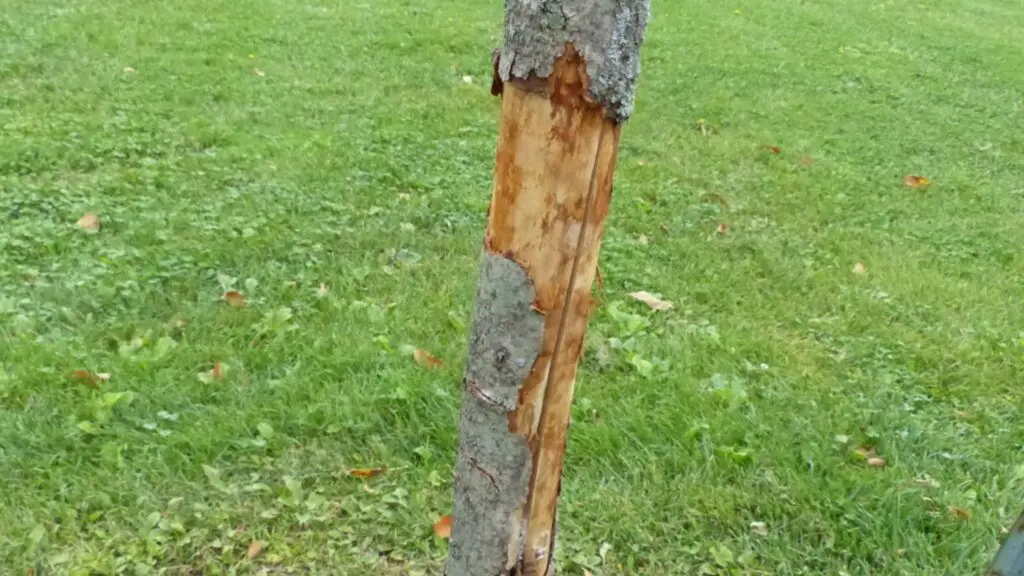
So rabbits will nibble on the bark near the base of your tree and that damage often circles the tree trunk completely. This is called girdling. The problem is that the outer layer of the trunk is home to the tree's vascular system where water and nutrients are transported up into the tree. If those tissues are destroyed, the tree can't feed itself and it will die.

How do you recognize rabbit damage on tree bark?
If you see damaged bark at the base of your tree and you know you have bunnies in your neighbourhood, it's very possible that they are responsible. Mice and other rodents may be guilty too.
But sometimes you will see girdling higher up on a tree. And yet, those big-eared rascals may still be to blame. In cold, snowy climates rabbits hop around on top of the snow, nibbling on the exposed bark. Then, as the snow melts, more bark is available lower down and the damage can be extensive as you can see in the image above.
So when it is time to buy or create a rabbit barrier for your fruit trees, consider the winter weather. If you are from a warm climate, a rabbit barrier that is just 12 inches (30 cm) high may be just fine. But if you live in a colder climate, make sure your rabbit barrier covers the trunk from the soil line, up to two feet (60 cm) or more.
So how do you create rabbit barriers for fruit trees in 10 minutes or less?
With a bit of creativity, you can protect your fruit trees in less than 10 minutes. There are options you can buy, options you can make...and options that you can find in your recycling bin!

Rabbit barriers for fruit trees that you can buy
There are lots of tree guards available on the market. White spiral tree guards are easy to put on young trees in the fall. Then you will remove them in the early spring once there is other food available for rabbits and other wildlife.
I like white spiral tree guards because they are flexible and can accommodate young tree trunks easily. The white colour also reflects the sun in the winter and protects your tree from sun damage.
And spiral tree guards take less than minute to put on. Just twist it around the trunk and ensure that the plastic coverage starts at the soil line and that it covers the lower bark effectively.
It's important to remove the plastic tree guards in the spring. If you don't, insect pests may lay their eggs underneath the plastic. Soon you will find swarms of hungry caterpillars preparing to climb up into your tree to feast on the foliage.

Not all ready-to-buy tree guards are equally effective. There are some that are barely a foot long and that will not protect your tree if you live in a snowy climate. So invest in a tree guard with more protection. A standard height is 24 inches.
Grow
Fruit Trees
That Thrive
Fruit Trees
That Thrive
Sign up for our newsletter and get this free eBook

Sign up for our newsletter and get this free eBook
Rabbit barriers that you can make from window screening
Plastic tree guards are good for young trees with narrow trunks. But there are a couple of situations where they won't work:
- Spiral tree guards don't fit on more mature trees with wider trunks
- Spiral tree guards are just 24 inches high and that may not be high enough if you live in a climate with very snowy winters.
So if you have older trees or if you live in a snowy climate you can make your own tree guards using a roll of window screening and a stapler or some wire.

I learned this technique from Chris Gonso, of Worries Are Gone Farm in Indiana. This method will allow you to make a guard that that can protect a tree of any size.
- Buy a roll of nylon or metal window screening that is a minimum of 48 inches (120 cm) wide.
- Fold the screen in half and cut it to make it into a tube that can circle the trunk of your tree leaving a couple of inches of space for future growth.
- Staple the two ends of the screening together.
- Leave this barrier on year round. Unlike plastic spiral guards, insects rarely hide under it.
Now, the downside here is that when trees grow, they grow in two ways. Their branches extend in length (primary tree growth) and their trunk and stems get thicker (secondary tree growth).
So over time your tree's trunk will get thicker and your home-made tree guard may eventually be too tight! If you leave it on, that tree guard can girdle and damage that tree, causing the deadly problem that we are trying to prevent.
So, keep an eye on your tree. After a few years, when the trunk is wider, remove the tube and replace it with a larger one. Or you may decide that since your tree's trunk is more mature and less appealing to rabbits, that you don't need to cover the trunk at all.

Rabbit barriers that you can make from hardware cloth
Another quick option is to make your rabbit barrier using hardware cloth that is 4 feet tall. You don't need to fold it over. Just create a loop out of the hardware cloth and secure it with wire.
If you feel that the barrier will blow around too much, you can secure it with wire to a single 4-foot stake to help keep the rabbit barrier in place.
Rabbit barriers you can find in your recycling bin
Have a peek in your recycling bin before you shop for window screening or hardware cloth. You may have a perfect rabbit barrier in there. You can use a 2 litre soda bottle and cut off the top and bottom and cut one slice down the side of the container.
Then slide your home made rabbit barrier around your young tree's trunk and dig the bottom inch or so into the soil so it doesn't blow around. Now your home-made rabbit barrier is ready to go.

Or you can skip the barriers and delegate the job to a four-legged friend
I suppose that as a last resort, you can do what Chris Gonso does as an extra layer of protection....he enlists his four-legged companion, Scout, into the fight against bark-eating bunnies. Within minutes, Scout will have Bugs in his mouth and Chris will have one less bunny to ravage his trees.
But if you're squeamish, why not give your dog a bone to play with instead? Then focus on these easy rabbit barriers that you can create in under ten minutes. Your pup can still enjoy spending time with you in the garden or orchard, but you won't have to worry about her bringing home an injured bunny as a souvenir.
Happy growing!

Susan Poizner
Award-winning author, podcaster, fruit tree care educator and creator of the fruit tree care education website OrchardPeople.com. Learn more about Susan on the about us page.
YOU MAY ALSO BE INTERESTED IN
Vertical Mulching for Fruit Trees: When Surface Mulch Isn't Enough

Are bee hotels safe? Or are they a death trap for native bees?
A Toronto based researcher discovers native bees aren't the only creatures who benefit from the trendy new "bee hotels".
A tell-tale sign of tree stress: Causes of gummosis on your cherry tree
If you see sticky goop oozing out of your cherry tree, it is gummosis. What are the causes of gummosis? Read more
5 Steps to Preparing Fruit Trees for Winter (and Preventing Winter Damage)
Fruit trees can sustain damage during the cold winters. Here's how to prepare your fruit trees to protect them from Read more