Why do some fruit trees thrive while others struggle? We compare two community orchards and explore what soil biology can Read more
Heirloom Fruit Recipes

If you’ve got some old-fashioned apples or pears on hand, I’ve got just the heirloom fruit recipes to help you turn them into something truly special—simple, delicious, and rooted in tradition.
There are literally thousands of apple varieties in the world and many have quirky names, rich histories and fantastic flavours - but you won't find these heirloom fruits in your local grocery store.
For example:
- Have you ever seen a bag of crispy, juicy and tart Horneburger Pancake apples on the shelves of your local supermarket? These apples, originating in Germany in 1850, are so large that one slice can fill a frying pan.
- Have you ever made an apple pie using sweet/tart Cranberry Pippins? These yummy apples first grew in New York in the 1840s.
- And have you ever tasted the pineapple-flavoured apple variety called Grange's Pearmain which stems back to 1829?
Most people's answer to all of these questions would be "No."

If you want to enjoy heirloom fruit, you need to find it at a local farmers market or grow it yourself on a tree ordered from a specialist fruit tree nursery.
Some heirloom fruit varieties are good to eat fresh off the tree, but many are at their best when they are cooked into soups, stews, jams, jellies and puddings.

So if you are lucky enough to have access to heirloom fruits, how should you prepare them? You can cook them into modern day dishes. And it can be really fun to enjoy those heirloom fruits as they were enjoyed in years past by preparing them using historic fruit recipes.
You can also try using modern day varieties from your supermarket in the recipes featured on this page. If you do, choose tart cooking apples like Granny Smith, Braeburn, Bramley or Northern Spy. But before we dig into the recipes, let's take a moment to find out what heirloom fruit actually is!
What is Heirloom Fruit?
Heirloom fruit trees are trees that were more commonly cultivated 50, 75 or even 100 years ago. Some of these fruits were introduced before the Second World War. Others may have a rich history that spans hundreds of years.
Heirloom fruit varieties are rarely grown commercially. This is partially because consumer tastes have changed. Today people love sweet, crispy and juicy apples like Honeycrisp or Gala. In contrast, heirloom fruit varieties may be tart and often are at their best in cooked dishes.
Heirloom fruit varieties may also have fallen out of favour because they don't store well. Commercial growers focus on fruits that can be easily stored and shipped. That means these flavourful fruits have fallen by the wayside over time.
But that is quickly changing. Consumers are becoming more interested in these rare or unusual varieties and they are discovering them at farmers markets, heirloom fruit tastings and other culinary events.

An Heirloom Fruit Revival
This heirloom fruit revival is happening for a number of reasons:
- Heirloom fruit varieties can have wonderful and unusual flavours. For instance, some heirloom apples can have exotic flavours with subtle hints of banana, vanilla or rose.
- Heirloom fruit tastings can allow you to literally have a taste of history as you are eating the same varieties that our ancestors enjoyed centuries ago.
- Consumers today are interested in organic produce that is grown locally on a small scale rather than produced on huge commercial farms. Heirloom fruits can be difficult to grow commercially because the are best eaten soon after harvest and often do not store or ship well.
Grow
Fruit Trees
That Thrive
Fruit Trees
That Thrive
Sign up for our newsletter and get this free eBook
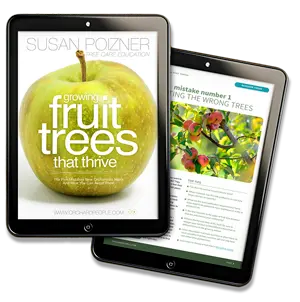
Sign up for our newsletter and get this free eBook
So if you want to enjoy heirloom fruits, it's a good idea to grow them yourself!
You can plant heirloom fruit trees in your own backyard, in an allotment garden or in a community orchard. Then you will be able to enjoy the fruits of your labour and try delicious heirloom fruit recipe like the ones featured below!

Heirloom Fruits From A Grower's Perspective
Darren Turpin is a professional gardener and passionate orchardist who works tending the gardens of Ordsall Hall in the UK, a beautiful historic building that dates back to 1177.
In his spare time, he grows heirloom fruit trees and other plants in an allotment garden and researches the history of fruit trees and other heirloom plants.
Over the years Darren has found fantastic heirloom fruit recipes. One of his favourites is a simple apple pudding with an unusual twist!
Essex Pudding is an apple pudding made from apples, sugar, eggs and mashed potatoes. This is a dish that would be ideal with any tart or cooking apple including heirloom apples like Bramley Seeding, Blenheim Orange or Howgate Wonder. Click below to see the recipe.
Essex Apple Pudding
This sweet apple pudding has a surprise ingredient: Potatoes! This heirloom fruit recipe comes from Eliza Acton's Modern Cookery in All Its Branches (1845). Recipe submitted by Darren Turpin of Orchardnotes.com.
Check out this recipe


Heirloom Fruit from a Historic Cook's Perspective
Paul Couchman of Regencycook.co.uk is also passionate about history. He is a historic cook and part of the team that renovated and recreated the kitchens at The Regency Town House in Hove, England.
He set up the successful Dine Like a Servant pop-up restaurant and he teaches historic cooking courses both online and in person in the old kitchen of The Regency Town House.
"For me, cooking historic recipes is like time travelling," he says.
One of Paul's favourite heirloom fruit recipes is Mother Eve's Pudding, a recipe he found in a handwritten book that is more than 200 years old.
The recipe was written as a rhyme, but it's made of apples, breadcrumbs, currants, sugar, butter, brandy and spices. You can find the recipe below.
Mother Eve's Apple Currant Pudding Recipe
This recipe dates back to England in the 1820s.
Check out this recipe


Heirloom Fruit from a Culinary Historian's Perspective
While Paul specializes in recipes from the early 1800s, culinary historian Brigitte Webster is passionate about the dishes that were popular during Tudor period which lasted from 1485 to 1603.
The former schoolteacher is now the owner of The Tudor Experience, a beautiful manor house dating back to 1510. There, she teaches Tudor cookery, and hosts banquets as well as corporate events. Visitors can also stay on the property in their B&B.
Brigitte is fascinated by Tudor cookery because this was a time when English dining habits changed from traditional meat-focused medieval cuisine to a more modern approach that integrated fruits and vegetables.
"We think the Tudors are so backwards," she says. "But indeed fruit and veg was as important to them as it is to us today. They understood that in order to be healthy you had to eat well, exercise, and you had to be happy."
Brigitte enjoys recipes that use unusual heirloom fruits like medlars. Another uncommon fruit she cooks with is the Warden Pear. Like the Jesuit Pear, an heirloom fruit that is growing in popularity in North America, Warden Pears need to be cooked in order to be eaten.
Brigitte grows Warden Pears in her young orchard alongside other heirloom fruits like Costard apples (that date back to the 13th century) and various cultivars of "Pippins." Pippin is another name for a cooking apple that tastes best in pies, tarts and mousses.
Below is one of Brigitte's favourite heirloom fruit recipes for "Spiced Pear Pie" from A Good Huswifes Handmaide for the Kitchin by Thomas Dawson written in 1594.
Tudor Spiced Pear Pie
This dish was featured in a cooking book in the 1500s and it still tastes good today. It's perfect for a Tudor style feast!
Check out this recipe

Learn More about Heirloom Fruit in the Full Podcast
Listen to the full podcast and learn more about heirloom fruit recipes where Darren, Paul and Brigitte share their stories and their recipes!
Go Back in Time with Heirloom Fruit Recipes 🍐 🥧 🍎 Orchard People


Susan Poizner
Award-winning author, podcaster, fruit tree care educator and creator of the fruit tree care education website OrchardPeople.com. Learn more about Susan on the about us page.
YOU MAY ALSO BE INTERESTED IN
Why do some fruit trees thrive while others struggle?
When to prune fruit trees
Wondering when to prune fruit trees? In this blog, we explore which trees benefit most from winter pruning and when Read more

When to Plant Bare Root Fruit Trees?
When to plant bare root trees? The best time to plant bare root trees is in the spring or fall Read more
How to Prune Old Apple Trees to Produce Better Fruit
Learn how to prune old apple trees.Pruning these old fruit trees will result in better quality fruit and habitat for Read more