From their vivid color to their complex flavors and growing conditions, red fleshed apples invite us to look more closely Read more
Growing Blueberries

Growing blueberries can be challenging. Sometimes the leaves turn yellow in the middle of the growing season. Other challenges include stunted growth and poor quality fruit. Sometimes the flower buds wilt and the berries start to look like little gray pumpkins. And sometimes tiny maggots make their way into the tasty fruit before you do. That really ruins the fun.
So what is the secret of growing blueberries successfully? In this interview we speak to Kathleen Demchak, Senior Extension Associate at Penn State College of Agricultural Sciences.
Kathy Demchak has been at Penn State since 1983, and currently works in berry crop research and extension. Current projects include evaluations of new blueberry cultivars and blueberry mulch and amendment practices. She earned a B.S. in Horticulture from Penn State and an M.S. in Horticulture from Virginia Tech.
Scroll down to read an excerpt from the interview on growing blueberries. Or click below to listen to the entire hour-long interview in episode 66 of The Urban Forestry Radio Show and Podcast.
What is pH and why is it important for a healthy blueberry plant?
pH is a measure of how acidic or basic your soil might be. And blueberries really do need a soil that is on the acidic side of that range. 4.5 to 5.2 is ideal, up to 5.5 is fine.

And, so, what is happening when the soil pH is in this more acidic range, is that the availability of different nutrients, and the forms in which they exist, based on soil chemistry are somewhat different.
For example, nitrogen (at lower pH levels) is in the ammonium form. Whereas you might look at a bag of fertilizer and see that perhaps it has something called nitrate in it, that's a nitrate form. That is not the kind of nitrogen that blueberries use. They actually need the ammonium form. And so, when you are under these lower pH conditions the nutrients are in forms that the blueberries are better able to take up.
Under lower pH conditions, micronutrients, such as iron or zinc, are also much more available to the plants. And, so, often if you put a blueberry in a soil that is too high of a pH, you'll see that it turns yellow because of usually an iron deficiency.
Growing Blueberries: Soil, Fertilizing and Pruning #growingblueberries #blueberrysoil

So, some of the first steps we want people to do, is to do a soil test on their soil. And we generally will recommend that they use a lab that is in their region, because normally they will use methods that give them the most accurate picture.
Grow
Fruit Trees
That Thrive
Fruit Trees
That Thrive
Sign up for our newsletter and get this free eBook

Sign up for our newsletter and get this free eBook
Will your lab test explain how to amend the pH of your soil?
Yes, typically they will give you that if you're a commercial grower on a per acre basis, or for a home garden, perhaps on a per thousand square foot basis. They will tell you how many pounds of sulfur you need, or other materials you could use.

Are there any special techniques for planting blueberries?
Blueberries have this very fine root system so they do need a lot of organic matter in the soil. And so, when you're planting your plant, we will recommend that you mix in about 50% peat moss, to 50% soil when you're making that planting hole, and putting your plants in the ground.
The bigger an area you can work this organic matter into, the better. And then after you plant your blueberry plants, we will want to mulch the plants, with organic matter. To keep those roots cool, and moist, and get your plants off to a good start.

When you are growing blueberries do you need to use a lot of fertilizer?
Blueberries don't need as much fertilizer as a lot of our other garden plants might. It is very easy to burn the roots off of them in the first year. So, normally when you get your soil test results, there will be some recommendations for mixing in nitrogen. So, that's mixed in throughout the whole bed so it's dispersed and you're not getting fertilizer concentrated in one area.
But then about two months after planting, once they've become established, you can give them a light dose of a nitrogen fertilizer. If you were using something like ammonium sulfate which is 20% nitrogen, you would only apply about a half of a tablespoon per plant maximum to give that plant a little extra nutrition in that first year.
You can use organic forms of fertilizer as well, that are made for acid loving plants. Those are fine too. They tend to be a little gentler, but yes, they don't need nearly as much.
And even in a mature planting, we are really still looking at fertilizer rates that are only about half that, that you might put on a tomato plant. We will gradually build up from that half tablespoon of ammonium sulfate. You may increase that to four to six tablespoons per plant in a mature planting, over the span of about five to six years.
But other than that, blueberries really don't need a whole lot of fertilizer. We do, however, recommend that people do continue to do a soil test every two to three years or so. Once the planting is established you test the soil just to see if any other nutrients are getting out of whack as they're being extracted from the soil.
How to Prune Highbush Blueberry Bushes

When should you prune blueberry bushes?
Coming into spring is when we would normally prune high bush blueberries or half-high blueberries. And the way blueberries grow is that they will normally send up new canes from the root system, and those canes will become more twiggy over time. And as they become more twiggy, they become thinner and they dry out and desiccate more quickly during the wintertime. Each of those tips can produce flower buds.
And so you can end up with those older canes producing a lot of small berries, whereas younger cane might produce bigger, fatter berries. And so, what we want to do with that plant is keep a range of cane ages on it, that are from about, one to five, or six years old.
Gradually, over time, we will prune out the oldest canes and allowed younger, newer canes to come up to replace those. And so that keeps the plant young. We'll also do some pruning to remove any kind of diseased looking wood, or anything that isn't growing well or that might be harbouring some problems.
more information about blueberries
Below you can find one of Kathleen's recent articles on blueberry plantings.
- "Keys to Establishing a Successful Blueberry Planting" By Kathleen Demchak.

Susan Poizner
Award-winning author, podcaster, fruit tree care educator and creator of the fruit tree care education website OrchardPeople.com. Learn more about Susan on the about us page.
YOU MAY ALSO BE INTERESTED IN
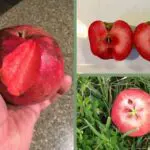
Red-Fleshed Apples: What They Taste Like, How to Grow Them, and Why They’re So Interesting
Let The Sunshine In: Indoor Lemon Tree Care
If you live in a cold climate, growing a lemon tree indoors is still possible. Learn how in this article.

A Superfood in your Garden: How to Grow Seabuckthorn Plants
Learn how to grow nutrient-rich Seabuckthorn berries with plant breeder Bill Schroeder of Agriculture and Agri-Food Canada.

Bush Cherry vs Dwarf Cherry Tree: Best Picks for Your Small Garden
Dwarf cherry tree, or cherry shrub: which is a better choice for your small garden?